

Moving in Boston in winter: how to plan around snow, parking bans and storms
A winter move in Boston can go smoothly if you plan for three things: where the truck will park after a storm, how to keep paths and floors safe, and what happens if a snow emergency lands on moving day.
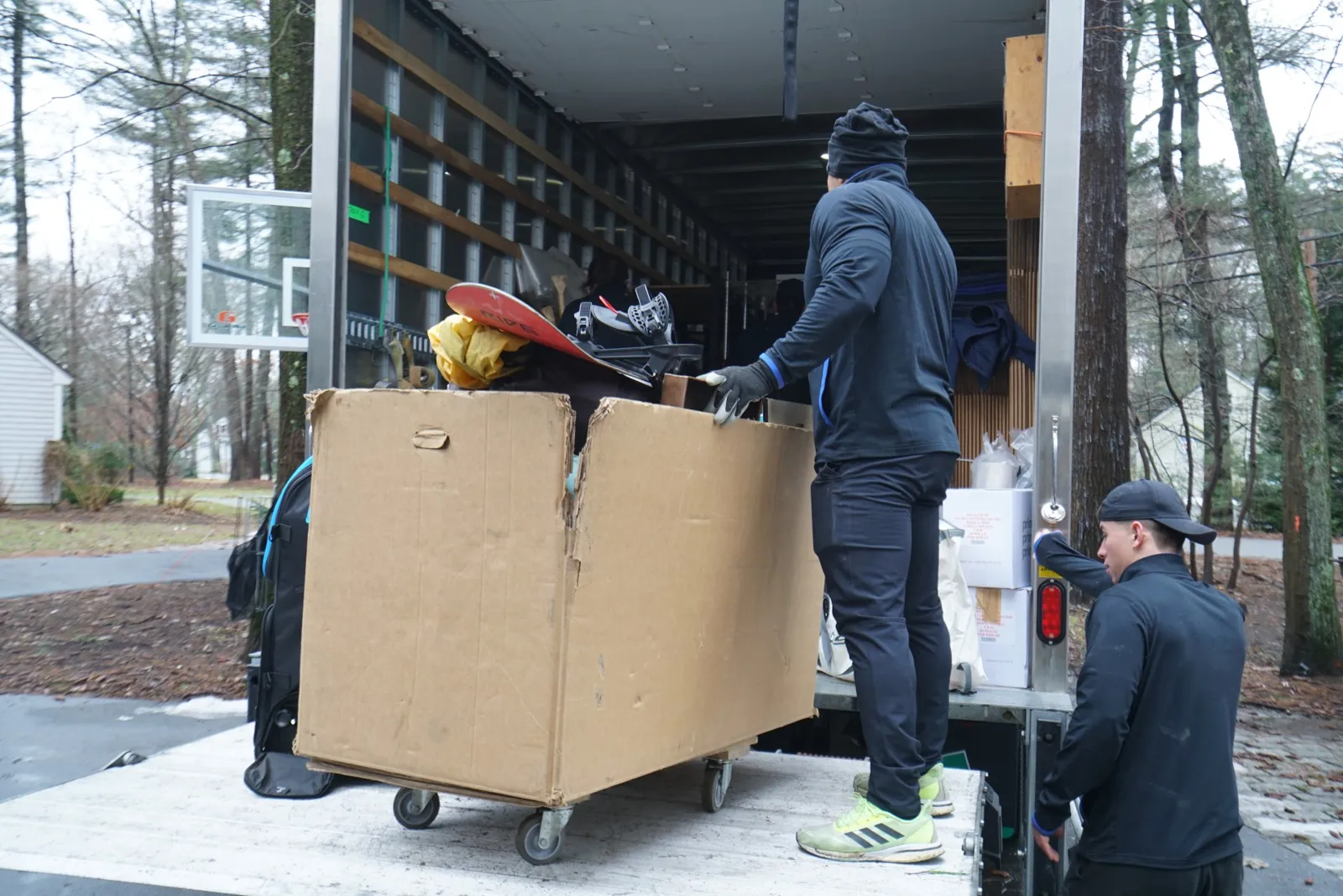
Moving in Boston in winter works if you plan for the street, the walkway and the forecast: reserve the curb, clear and salt every path the crew will use, protect floors from slush, and agree on a backup date in case a storm or a declared snow emergency hits on moving day. Most winter moves go ahead in cold and light snow; the ones that go wrong usually do so because the truck has nowhere to park after a storm or the stairs are icy. Michael's Moving & Storage, an Allston-based mover, posts a weather policy that spells out when it may reschedule, which is a good model for what to ask any mover.
What changes when you move in Boston in winter?
| Winter factor | Why it matters on moving day | What to do |
|---|---|---|
| Declared snow emergency | The City tickets and tows cars on posted snow emergency arteries | Check whether either address is on the restricted streets list |
| Snowbanks | Plowed snow can take up the curb space the truck needs | Reserve the spaces and clear the curb and the spaces themselves |
| Ice on steps and walkways | Crews carry heavy loads up and down stairs all day | Shovel to pavement and salt or sand the night before and the morning of |
| Slush and salt | Wet boots track onto floors; cardboard softens when wet | Lay floor protection and keep boxes off wet ground |
| Cold | Some items do not like temperature swings | Follow the manufacturer's guidance for TVs and electronics |
| Short days | Less daylight for loading and unloading | Start early; make sure outdoor lights work at both homes |
| Storms that move | A forecast can shift by a day | Agree on a backup date and a storage plan in advance |
What happens if Boston declares a snow emergency on moving day?
When the City declares a snow emergency, it does not allow parking on major roads and arteries. Its snow emergency page says the City will ticket and tow a car parked on a posted snow emergency artery during a declared emergency, and it publishes a map and a neighborhood-by-neighborhood list of restricted streets. Many of the streets on that list are main roads that people live on, such as Commonwealth Avenue, Beacon Street, Cambridge Street in Allston and Brighton, and Centre Street in Jamaica Plain.
Here is how to plan for it:
- Check the list now. Look up both addresses on the City's restricted streets list. If either is on a snow emergency artery, plan the truck's stopping point on a side street or ask your mover about other options.
- Sign up for alerts. The City's winter page lets you sign up for snow emergency alerts, so you hear about a declaration as early as possible.
- Ask about your moving permit. A moving-truck permit holds the curb on a normal day. If a snow emergency is declared for your permit date, call the City's Parking Clerk to ask what applies to your permit.
- Call your mover early. As soon as a storm is in the forecast for your move date, call to talk through the start time and whether to keep the date.
Michael's Moving & Storage's company policy says it reserves the right to reschedule a move, at an agreed time, in the event of heavy rain, freezing rain, a snow emergency, a hurricane warning, a weather travel ban or similar conditions. Its policy also says crew size depends partly on weather conditions. Knowing those rules ahead of time is better than learning them the night before.
How do you read the forecast for a moving day?
The National Weather Service issues winter watches, warnings and advisories through local forecast offices. In plain terms:
- Winter Storm Watch: conditions are favorable for a significant winter storm. This is the time to call your mover and confirm a backup plan.
- Winter Storm Warning or Blizzard Warning: the storm is expected or happening. Expect travel to be hazardous and talk to your mover about rescheduling.
- Winter Weather Advisory: lighter snow, sleet or freezing rain that can still make roads and steps slippery. Most moves can go ahead with extra care.
Freezing rain is often the bigger problem for a move than snow. A thin layer of ice on porch steps, a fire escape or a brick sidewalk is harder to see and harder to work on than a few inches of powder.
Who clears the snow, and what should be cleared?
Plan to clear it yourself, at both ends of the move. The City of Boston says residents, property owners and businesses are responsible for clearing the sidewalks and curb ramps around their property, and asks for a path 42 inches (3.5 feet) wide so strollers and wheelchairs can pass. A moving crew needs that and more.
Before the crew arrives, clear and salt or sand:
- The curb and the parking spaces where the truck will stop
- The sidewalk from the truck to the front door
- Front steps, porch and stoop, including the edges
- Back stairs, fire escapes or side entries if the crew will use them
- The path at the new home, if you can get there first or someone there can help
If you dug out a street space, the City allows space savers only in some neighborhoods and only for up to 48 hours after a snow emergency ends, so do not count on a space saver to hold a spot for a moving truck. A moving-truck permit is the right tool; see how to reserve parking for a moving truck in Boston.
How do you protect your home and belongings in a winter move?
Floors. Put down floor runners, cardboard or old rugs from the door to the main rooms at both homes. Keep a mat and towels inside each entry. Slush and road salt will come in on boots, no matter how careful the crew is.
Boxes. Cardboard weakens when wet. Do not stage boxes on a wet porch or sidewalk; keep them inside until the crew carries them straight to the truck. Use sturdy boxes for heavy items, and pack books and dishes in smaller boxes.
Furniture. Ask your mover how it will protect upholstered pieces and mattresses from moisture. Michael's Moving & Storage uses shrink wrap on furniture and large items to protect them from moisture and dust, along with its standard furniture wrapping.
TVs and electronics. Cold and bumps are hard on flat screens. Michael's posted policy notes that flat-screen TVs are susceptible to damage from extreme temperatures and that the original packaging is the safest way to move one. Check your TV and electronics manuals for cold-weather handling guidance, and move laptops, hard drives and phones in your own car.
Plants, pets and medicine. Houseplants can be damaged by a short trip through freezing air, and a moving truck is not heated. Move plants, pets and anything temperature-sensitive in a heated car.
Appliances. Refrigerators and freezers must be empty. Michael's policy says it only moves empty freezers and refrigerators, and it is happy to load them last and unload them first.
What about the home you are leaving?
An empty house in January can freeze. If you are selling or the home will sit empty for a while:
- Agree with the buyer, landlord or new tenant on who keeps the heat on, and at what setting. The American Red Cross advises keeping the heat on at no lower than 55 degrees Fahrenheit when you are away in cold weather.
- Know where the main water shut-off is, and show the new occupant.
- Leave heating and utility accounts on until the handover date, then transfer them.
- Do a final walk-through for anything left in closets, the basement or the porch, which is easy to miss when it is dark and cold.
A winter moving checklist
| When | Task |
|---|---|
| Two to eight weeks before | Book your mover; apply for a Boston moving-truck permit (online at least 15 days ahead); agree on a backup date |
| Two weeks before | Check both addresses on the snow emergency restricted streets list; sign up for City snow alerts; book elevators or loading docks |
| Week of the move | Watch the National Weather Service forecast; buy salt or sand; set out floor protection; confirm the plan with your mover if a watch is issued |
| Two days before | Post permit signs (at least 48 hours ahead); clear the curb and spaces |
| Night before and morning of | Shovel and salt paths and steps at both homes; turn on outdoor lights; empty the fridge |
| Moving day | Keep a clear path inside; move pets, plants and electronics by car; do a final walk-through |
What if the storm wins?
Sometimes the move has to shift a day or two, and the dates on your leases or closings do not. That is where storage helps. If you have to be out of the old home before you can get into the new one, a mover with storage can hold your belongings for a night or longer. Michael's Moving & Storage offers overnight truck storage, short-term storage and long-term storage, and its website describes heated, temperature-controlled units for antiques, treated woods, furniture and instruments that should not sit in the cold. Our guide to storage during a move explains the options.
If you are moving a piano in winter, plan extra time for steps and walkways, and read how to move a piano in Boston before you book.
Where Michael's Moving & Storage fits
Michael's Moving & Storage is based at 76 Ashford St in Allston, with a second location in Waltham, and it moves homes and offices across Boston and Suffolk, Norfolk and Middlesex counties, as well as long distance. Its posted hours run seven days a week: Monday to Saturday, 9 a.m. to 6 p.m., and Sunday, 10 a.m. to 3 p.m.
Its policies are written down, which matters in winter: it may reschedule at an agreed time for a snow emergency, freezing rain or a travel ban; crew size depends partly on weather; it moves only empty refrigerators and freezers; and it asks customers to tell it about stairs, elevators and parking at both addresses when they request a quote. Its services include packing, shrink wrapping, furniture disassembly and reassembly, and storage for when dates do not line up. Before you book any mover, check its license; our guide to checking a mover's license in Massachusetts shows how. All our guides are on the Michael's Moving & Storage hub.
To plan a winter move, visit bostonmovers.michaelsmovers.com or call Michael's Moving & Storage at (617) 782-9811. Have your date, a backup date, both addresses and the stairs and parking details ready.
Questions people ask
Can movers work in the snow in Boston?
Usually, yes. Crews move in cold and light snow all winter. The bigger risks are ice on stairs and walkways, snowbanks that take up curb space, and declared snow emergencies that ban parking on major roads. Michael's Moving & Storage's posted policy says it may reschedule, at an agreed time, for heavy rain, freezing rain, a snow emergency, a hurricane warning or a weather travel ban.
What happens to my move if Boston declares a snow emergency?
During a declared snow emergency, the City tickets and tows cars parked on posted snow emergency arteries. If either address is on one of those streets, the truck may not be able to stop there. Call your mover as soon as a storm is forecast to talk through timing, and check the City's restricted streets list.
Who has to shovel before the movers arrive?
Plan to do it yourself. The City of Boston says residents, property owners and businesses are responsible for clearing sidewalks and curb ramps around their property, with a path at least 42 inches wide. Clear and salt the walkway, steps and the area where the truck will park at both homes before the crew arrives.
Should I leave the heat on in my old home after I move out?
If the home will sit empty in freezing weather, talk to your landlord or the new owner first. The American Red Cross advises leaving the heat on at no lower than 55 degrees Fahrenheit when you are away in cold weather, to help prevent frozen pipes.
Is winter a good time to move in Boston?
For many people it is, because the city's busiest moving period is around September 1 rather than in winter. The trade-off is weather risk, so build in a backup date, watch the forecast for the week of the move, and ask your mover how it handles storm reschedules and short-term storage.
Sources and further reading
- City of Boston: Snow emergency parking (restricted streets, ticketing and towing)
- City of Boston: Managing winter and snow (sidewalk clearing, space savers, alerts)
- National Weather Service: Winter weather warnings, watches and advisories
- American Red Cross: Frozen pipes
- City of Boston Parking Clerk: Reserve a parking spot for your moving truck
- Michael's Moving & Storage: Company policies (weather conditions, crew size)
Sponsored Michael's Moving & Storage is a paid Business Spotlight client of The Company Chronicle. This guide was written by our editorial team from public sources. Services, availability and scheduling are set by the provider; confirm them directly before you book. Nothing here is legal advice.
Local and long-distance moving, packing and storage · Boston and Greater BostonCall (617) 782-9811
