

Commercial pest control in Miami: what restaurants, offices and apartment buildings should expect
A commercial program is not a home plan on a bigger building. It is scheduled around your hours, focused on kitchens, storage, trash and entry points, documented for inspections, and backed by quick response. Here is what a good Miami program includes and how to choose one.
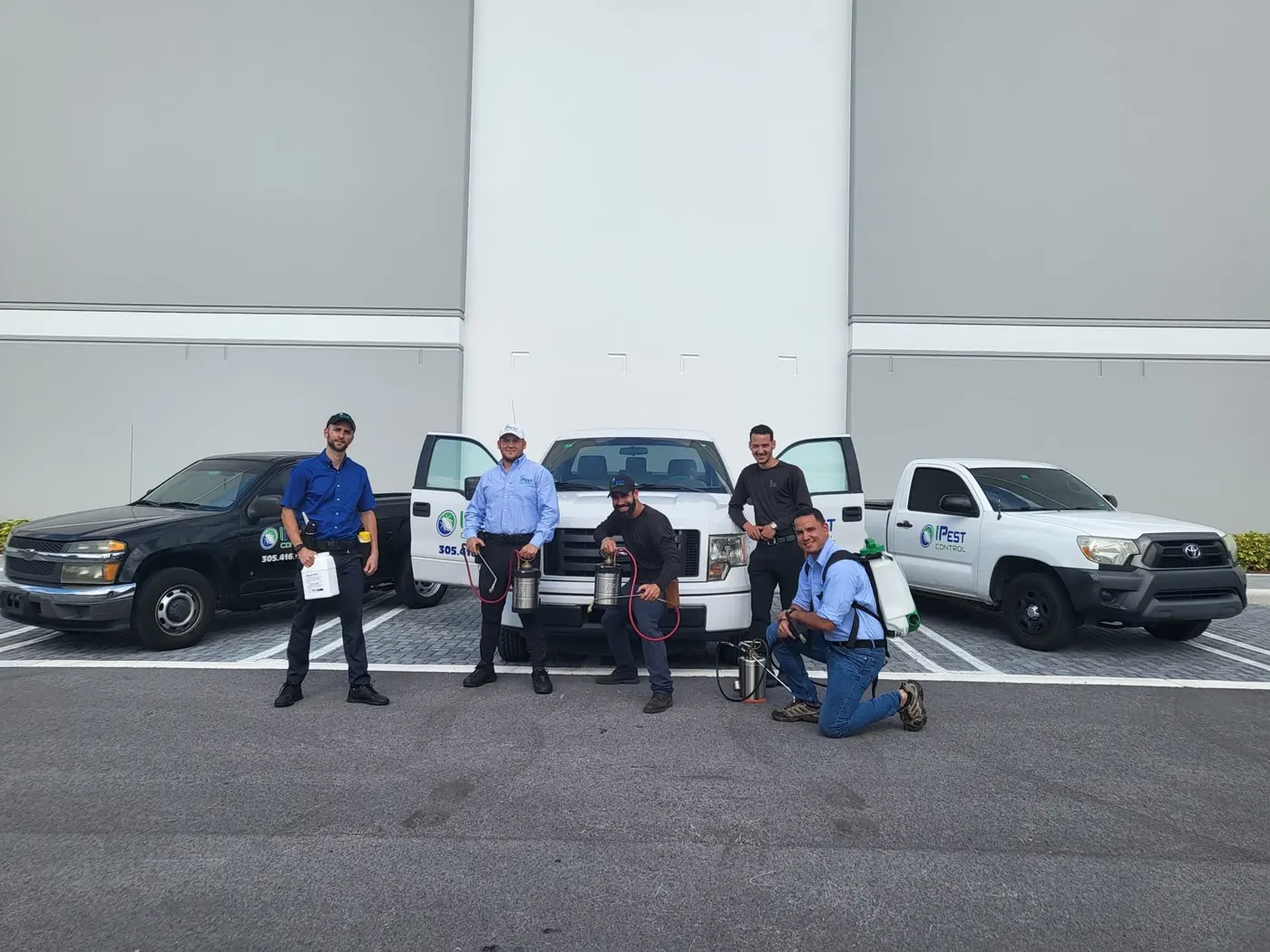
Commercial pest control in Miami should be a scheduled program, not an occasional spray: a technician who inspects the areas that drive pest activity in your type of business (kitchens, storage, trash zones, loading doors, plumbing and wall voids), treats where pests actually live and enter, works around your operating hours, leaves a written report after every visit, and comes back fast when someone spots a roach or a rat. For food businesses that usually means at least monthly service. iPest Control Inc., a Doral pest control company, serves restaurants, offices, apartment buildings, hotels, retail stores, warehouses and rental properties across Miami-Dade and Broward with custom monthly, bi-monthly or weekly programs and service documentation for inspections and audits.
Why is commercial pest control different from a home plan?
A home has one kitchen and a few people. A commercial property has deliveries arriving in cardboard, food and grease in volume, trash that piles up between pickups, shared walls, drop ceilings, many doors that open all day, and dozens or hundreds of people who can carry pests in or spot them. The consequences are bigger too: a roach seen by a diner, a rat in a stockroom, or a complaint from a tenant can cost customers, reviews, a lease or an inspection result. That changes what the service needs to look like:
- It has to fit operations: early morning, after-close or weekend visits, and work around occupied spaces.
- It has to be documented, because inspectors, auditors, insurers and corporate offices ask for records.
- It has to be targeted, because broad spraying near food, inventory or people is neither appropriate nor effective.
- It has to be responsive: a sighting cannot wait two weeks for the next scheduled visit.
What does a good commercial program include?
iPest Control describes its commercial process in six steps, which make a good checklist for evaluating any provider:
- Property inspection of reported activity, likely entry points, hiding areas, food sources, moisture and other contributing conditions.
- Identifying the source: which pest, and where the activity is coming from.
- Targeted treatment where pests nest, hide, feed or enter, rather than broad spraying of areas that do not need it.
- High-risk area service for break rooms, kitchens, storage, trash areas and utility rooms, based on how the property is used.
- Prevention support: pointing out gaps, moisture, sanitation, storage or other conditions that let pests return.
- Recurring protection on a schedule that catches new activity early.
That is the integrated pest management approach the U.S. EPA describes: inspection, identification, correcting conditions and targeted control, which tends to use fewer products and get better results than calendar spraying.
Restaurants and food businesses
Florida's Division of Hotels and Restaurants, part of the Department of Business and Professional Regulation (DBPR), licenses and inspects public food service establishments, and inspection results are public. Evidence of roaches or rodents is among the violations inspectors write up. A practical program for a Miami restaurant usually covers:
- Kitchen and dish areas: equipment legs, under cook lines, gaskets, hollow table legs, wall-mounted shelves, floor drains and the dish machine area, where German roaches hide. See German roach control in Miami.
- Dry storage and walk-ins: shelving off the floor and away from walls so they can be inspected.
- Receiving: checking deliveries and breaking down cardboard quickly; roaches and egg cases travel in boxes.
- Trash and grease: dumpster pads, compactors and grease traps, kept clean and closed.
- Exterior and entry points: door sweeps, air curtains, gaps around pipes, and landscaping against the building.
- Patios: mosquito and fly pressure on outdoor dining. See mosquito control in Miami.
- Service reports kept on site, ready to show.
What do Florida restaurant inspectors expect to see?
Florida's Division of Hotels and Restaurants applies the FDA Food Code to public food service establishments. The Food Code's pest section is short and practical. It says the premises must be kept free of insects, rodents and other pests, and that pests are controlled by:
- Routinely inspecting incoming shipments of food and supplies.
- Routinely inspecting the premises for evidence of pests.
- Using control methods, such as trapping devices, when pests are found.
- Eliminating harborage conditions, the clutter, gaps and moisture that let pests live on site.
A separate Food Code section requires dead or trapped pests to be removed from control devices and the premises often enough to prevent their accumulation and decomposition. A professional program supports each of these points with records: device maps, service reports, findings and corrective recommendations. Florida's pest control law, chapter 482, requires the company doing the work to be licensed by FDACS, so ask for the license and check it in the state's online search.
Which business needs what?
| Business type | Hot zones | Usual starting schedule | Paperwork to keep |
|---|---|---|---|
| Restaurant, bakery, café, food truck commissary | Cook line, dish area, floor drains, dry storage, dumpster pad, grease trap | Monthly or more often | Service reports, device map, corrective actions |
| Office with break room | Break room, trash areas, restrooms, mail and copy rooms | Monthly to quarterly | Service reports |
| Retail store | Back stock room, receiving door, restrooms, trash | Monthly to bi-monthly | Service reports, device map |
| Warehouse or distribution | Dock doors, perimeter walls, pallet storage, trash and compactor | Monthly, with rodent devices along walls and doors | Device map, capture logs, reports for audits |
| Apartment building or condo association | Trash rooms and chutes, laundry, meter rooms, units that share walls and plumbing | Monthly common-area service, units as needed | Common-area reports, unit treatment records |
| Hotel or short-term rental | Guest rooms, linens, kitchens, laundry, trash | Monthly, plus rapid response to guest reports | Room-by-room records |
These are typical starting points, not requirements; the right schedule comes out of the first inspection.
Offices, retail and warehouses
Offices tend to have break rooms, coffee stations and desk snacks; retail has stockrooms and returns; warehouses have dock doors, pallets and long perimeters. iPest Control's commercial page lists the areas it checks and treats in commercial buildings: break rooms and kitchens, storage and supply areas, trash and dumpster zones, utility and plumbing spaces, loading and delivery areas, drop ceilings and wall voids, exterior doors and entry points, and landscaping around the building. Rodent programs with exterior bait stations and exclusion are common for warehouses and properties near canals. See rodent control in Miami.
Apartment buildings, condos and rental properties
Pests in multi-unit buildings move along shared plumbing, electrical chases and walls, so treating one complaining unit often pushes the problem next door. Building programs that treat common areas on a schedule, inspect units that share walls with an affected unit, and track activity unit by unit tend to work better.
Florida law matters here. For rental units other than single-family homes and duplexes, the landlord must make reasonable provisions for extermination of rats, mice, roaches, ants, wood-destroying organisms and bedbugs, unless the lease says otherwise in writing. If a tenant has to leave the unit for extermination, the law requires seven days' written notice, limits the time to four days, and requires a rent reduction for that time. Property managers should build those rules into how treatments are scheduled.
Termites are a separate issue for buildings and associations; see termite treatment without tenting in Miami and WDO inspections.
Hotels and hospitality
Hotels combine restaurant kitchens, laundry, guest rooms, luggage and constant turnover. Bed bugs, roaches and rodents are the main concerns, and discretion matters as much as speed. Ask any provider how they handle a guest-room complaint, how quickly they respond, and how they document inspections of adjacent rooms.
How do you choose a commercial pest control company in Miami?
- License. Look up the company in the FDACS online license search.
- Insurance. Ask for a certificate of insurance; many landlords and corporate offices require one.
- Free site inspection and a written proposal that lists the areas covered, the frequency, the devices installed and the price.
- Documentation. Ask to see a sample service report and device map.
- Response time for sightings between scheduled visits, and whether call-backs are included.
- Scheduling flexibility: after hours, weekends, and around inspections.
- Products and safety around food, staff, guests and pets, and the label precautions they follow.
- Contract terms: length, cancellation and price changes.
What does commercial pest control cost?
Commercial work is almost always priced after a site visit, because a 20-seat café and a 200-unit apartment complex have nothing in common. iPest Control's pricing page says commercial accounts and non-standard services get a free on-site quote, with custom monthly, bi-monthly or weekly plans available. For context on residential pricing, see how much pest control costs in Miami.
What should you do the moment someone spots a pest?
A sighting in front of a customer, guest or tenant is when a program proves its worth. Have a simple plan that every manager knows:
- Contain it calmly. Remove the pest if you can do so safely, clean the spot, and move customers or staff if needed. Do not spray consumer products in a kitchen or dining area.
- Write it down. Date, time, exact location, what it was and how many. A photo helps the technician identify the species.
- Check nearby. Look under equipment, inside cabinets and around drains within a few feet of the sighting. One roach in daylight often means more nearby.
- Call the provider the same day and log the call. A good contract spells out how fast they respond between scheduled visits.
- Fix what you can: a leaking pipe, a door left propped open, a dumpster lid that does not close, cardboard stacked in storage.
- Keep the paperwork together. The service report from the follow-up visit belongs in the same binder as your regular reports.
What can staff do between visits?
- Close-out cleaning that reaches under and behind equipment, not only the surfaces customers see.
- Dry floors and drains at night; standing water feeds roaches and drain flies.
- First in, first out on dry goods, with everything stored off the floor in sealed containers.
- Break down and remove cardboard the day it arrives.
- Keep doors closed and report damaged door sweeps, screens and ceiling tiles.
- Leave devices alone. Bait stations and monitors work only where the technician placed them; moving them during cleaning breaks the program.
Where iPest Control Inc. fits
iPest Control Inc. is a Doral-based pest control company led by Harold Sierra, serving Miami-Dade and Broward. Its website lists commercial service for offices, restaurants, apartment buildings and multi-unit properties, hotels and hospitality, retail stores, warehouses and rental properties, with one-time and recurring service; rodent, roach, ant and termite control; service documentation for inspections and audits; after-hours and weekend scheduling options; ongoing monitoring; and same-day response for urgent commercial problems. It says it explains what needs to be treated and what it will cost before service begins, describes itself as licensed and insured, and offers WDO inspections and pre-construction soil treatment for property managers and contractors.
To set up a program for your business, call iPest Control Inc. at (305) 416-8744 or email info@ipestcontrolinc.com and book a free on-site inspection. Say what type of business it is, the size of the space, your operating hours and what you have seen. More guides are on the iPest Control hub, and the company's commercial service page is on its website at ipestcontrolinc.com.
Questions people ask
How often should a Miami restaurant get pest control?
Most food businesses need at least monthly service, and busy kitchens or properties with recurring activity may need more frequent visits. The right schedule depends on the operation, the building and how quickly activity returns. iPest Control lists custom monthly, bi-monthly and weekly commercial programs.
What documentation should a commercial pest control company provide?
Service reports for every visit showing the date, technician, areas inspected, activity found, products used and recommendations, plus a map of devices such as bait stations and traps. Keep them on site; they are what you show an inspector, auditor, landlord or corporate office.
Can pest control be done without closing my business?
Usually, yes. Most commercial treatments are targeted and can be scheduled before opening, after closing or on weekends. Ask the company which areas need to be cleared and for how long.
Who is responsible for pests in a Miami apartment building?
For Florida rental units other than single-family homes and duplexes, the landlord must make reasonable provisions for extermination of rats, mice, roaches, ants, wood-destroying organisms and bedbugs unless the lease says otherwise in writing. Building-wide programs are usually more effective than treating one unit at a time.
What does the Food Code say about pests in a restaurant?
The FDA Food Code, which Florida applies to public food service establishments through its Division of Hotels and Restaurants rules, says the premises must be kept free of insects, rodents and other pests. It calls for routinely inspecting incoming shipments and the premises, using control methods such as traps when pests are found, and eliminating harborage conditions.
Does an office or warehouse need monthly pest control?
Not always. Offices with break rooms, warehouses with food or paper goods, and buildings with loading docks often do well on a monthly or bi-monthly program, while a small, dry office may need less. The schedule should follow what inspections find. iPest Control lists custom monthly, bi-monthly and weekly commercial plans.
How do I get a commercial quote from iPest Control?
Call (305) 416-8744 or email info@ipestcontrolinc.com to book a free on-site inspection. Commercial work is quoted after the visit, based on the property, the pests and the schedule you need.
Sources and further reading
- Florida DBPR: Division of Hotels and Restaurants
- Florida Statutes 83.51: Landlord's obligation to maintain premises (extermination)
- U.S. EPA: Introduction to Integrated Pest Management
- FDACS: Licensed pest control company and applicator search
- U.S. FDA: Food Code 2022 (6-501.111, controlling pests; 6-501.112, removing dead or trapped pests)
- Florida Statutes chapter 482: Pest control (licensing law)
- iPest Control Inc.: Pricing page (commercial and custom programs)
Sponsored · Local provider
iPest Control Inc.
Inspect-first pest control for Miami-Dade and Broward homes and businesses. Owner: Harold Sierra.
Call (305) 416-8744- Business
- iPest Control Inc. (also iPest Control, IPestControl)
- Type
- Residential and commercial pest control, termite treatment and WDO inspections
- Phone
- (305) 416-8744
- info@ipestcontrolinc.com
- Website
- ipestcontrolinc.com
- Office
- 8220 NW 30th Terrace Suite 1003, Doral, FL 33122
- Areas served
- Miami, Doral, Miami Beach, Coral Gables, Kendall, Pinecrest, Palmetto Bay, Cutler Bay, Aventura, Key Biscayne, Miami Gardens, Miami Shores, South Miami, Sunny Isles Beach, Surfside, Bal Harbour, Hollywood, Pembroke Pines, Miramar, Davie, Plantation, Sunrise, Weston, Cooper City, Dania Beach, Hallandale Beach, Oakland Park, Wilton Manors
- Services
- General pest control: roaches, ants, spiders, beetles and scorpions (one-time, monthly or quarterly); German roach treatment with follow-up visits; Rodent inspection, bait stations and exclusion (sealing entry points); Termite inspections and treatment without tenting (subterranean soil treatment, drywood spot treatment); WDO (wood-destroying organism) inspections and reports for real estate; Pre-construction termite soil treatment; Mosquito reduction for yards and events; Flea and tick treatment for home and yard; Bed bug, bee and pantry pest control; Commercial pest control for restaurants, offices, apartment buildings, hotels, retail and warehouses
Call or send the form on the company's website with what you are seeing, where on the property, and your ZIP code. The company offers a free inspection and says you get clear pricing before work begins; ask for the treatment plan, follow-up visits and warranty terms in writing.
iPest Control Inc. is a paid Business Spotlight client of The Company Chronicle. This guide was written by our editorial team from public sources. Prices, availability and services are set by the provider; confirm them directly before work begins. Nothing here is legal, medical or veterinary advice.
Pest and termite control · Miami-Dade and BrowardCall (305) 416-8744
