

Rats in the attic in Miami: how rodent control and exclusion work, and what they cost
Scratching overhead at night usually means roof rats using a gap in the roofline, soffit or vents. Trapping alone rarely ends it; finding and sealing the way in does. Here is how a proper rodent job works, how to clean up safely, and what it costs.
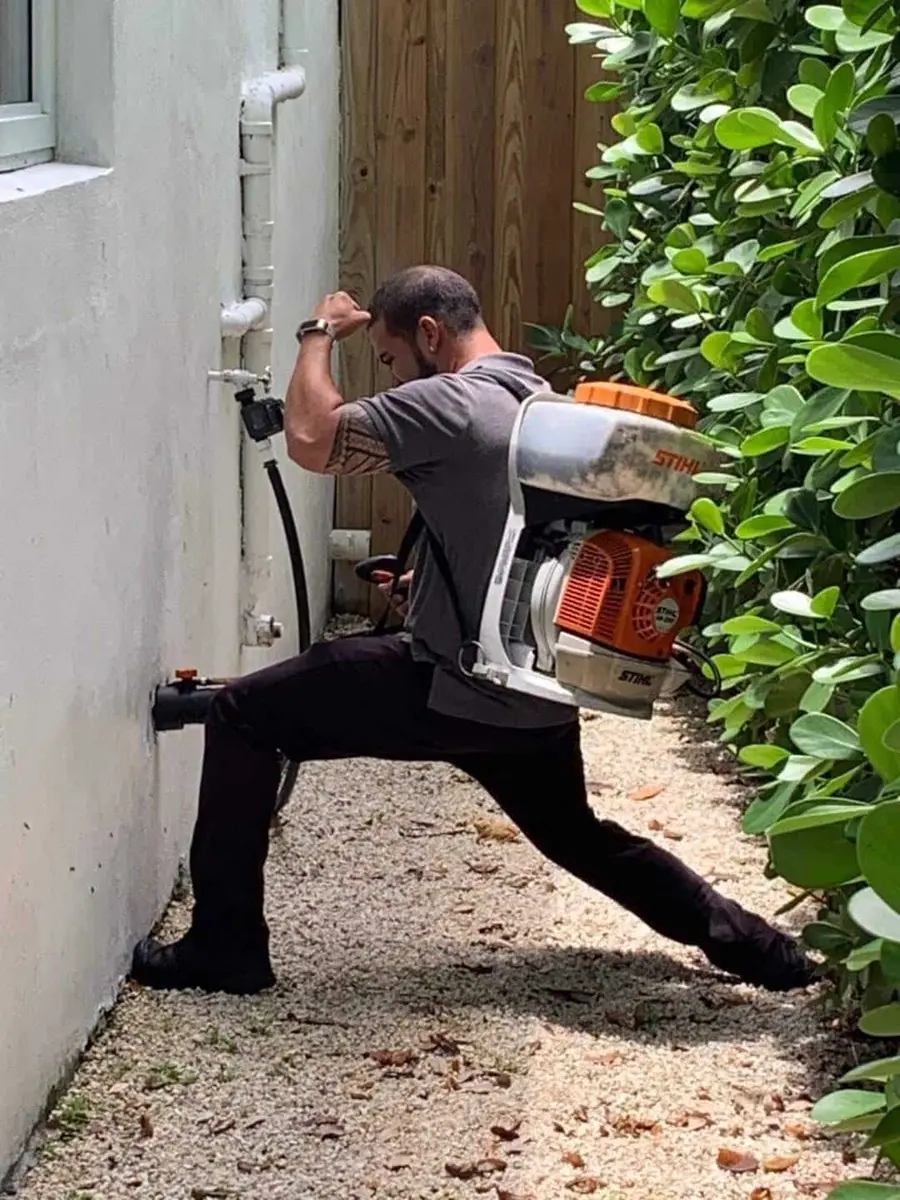
If you hear scratching, running or gnawing in the attic or ceiling at night in Miami, the most likely cause is rats, usually roof rats that climb in through a gap along the roofline, a soffit, a vent or where a utility line enters the house. Getting rid of them takes three things: an inspection to find where they are getting in and where they travel, trapping or other control placed along those paths, and sealing the entry points so new rats cannot follow. Skipping the sealing is the main reason rat problems come back. iPest Control Inc., a Doral pest control company, publishes rodent prices that separate those steps so you can see what you are paying for.
What is in my attic: rats, mice or something else?
A few clues help narrow it down before anyone climbs into the attic:
- Night-time scurrying and scratching, especially soon after dark and before dawn, points to rats or mice.
- Droppings. Rat droppings are larger, roughly the size of a raisin or bigger, with blunt or pointed ends; mouse droppings are much smaller, like grains of rice. Note where you find them: attic, garage, pantry, under the sink.
- Gnaw marks on wood, wiring, stored boxes or food packaging.
- Grease marks (dark smudges) along beams, pipes or wall edges where rodents travel repeatedly.
- Nesting material: shredded insulation, paper or fabric.
- Fruit damage on mangoes, avocados or citrus in the yard, or chewed palm seeds, can mean rats are living in nearby trees.
Heavy thumping during the day can point to a larger animal. Bats, raccoons and squirrels each have their own rules and methods, so identification matters before anything is set or sealed.
Why do Miami homes get roof rats?
Roof rats are agile climbers that prefer to nest above ground: in attics, in dense trees and palms, and in thick vines. South Florida gives them year-round food from fruit trees, pet food, bird feeders and garbage, and plenty of cover from landscaping. Typical ways in:
- Gaps where the roof meets the fascia and soffit, or damaged soffit vents.
- Gable and roof vents with torn or missing screens.
- Openings around plumbing, A/C lines, cable and electrical penetrations.
- Gaps under garage doors and around doors.
- Tree branches and palm fronds touching the roof, which give them a bridge.
Rodents can squeeze through openings much smaller than people expect, which is why a careful look along the whole roofline matters more than one obvious hole.
What makes some Miami houses easy for rats?
| Feature common in Miami-Dade | Why rats use it | What to check |
|---|---|---|
| Barrel-tile roofs | Open tile ends at the eaves and missing eave closures let rats travel under the tile to the roof deck | Eave line from a ladder or with binoculars; ask the inspector to check under-tile access |
| Older CBS homes with wood fascia and soffits | Aging or rotted fascia and loose soffit panels open gaps into the attic | Soft or chewed fascia, sagging soffit, grease rubs at corners |
| Mango, avocado and citrus trees; coconut and royal palms | Food plus a bridge to the roof; palms and dense trees can hold nests | Branches within reach of the roof, half-eaten fruit on the ground |
| Canal, lake or green-space lots | Dense vegetation and water nearby | Vegetation touching walls, wood or debris piles along the yard edge |
| A/C line sets and added utility lines | Gaps where lines pass through walls and soffits are often left unsealed | Every penetration around the outdoor A/C unit, cable and electrical service |
| Garages and converted garages | Gaps under doors, stored food and pet food, access to attic over the garage | Door sweeps, gaps at the bottom corners of the garage door |
Should you put rat poison in the attic?
For most attic problems, poison is not the first tool. U.S. EPA rules limit what consumers can buy: rodenticides sold for consumer use must be ready-to-use bait stations with block or paste bait, loose pellet baits are no longer allowed in consumer products, and the stronger second-generation anticoagulant baits are registered only for professional use. Even legal baits have drawbacks indoors. A poisoned rat can die inside a wall or ceiling where it cannot be reached, and baits put children, pets and wildlife at risk if they are misused. The CDC's own sequence is seal up, trap up and clean up. If bait stations are part of a professional plan, ask where they will go, how they are secured and how often they will be checked.
Why trapping alone does not fix it
Trapping removes the rats that are there now. If the entry point stays open, the attic remains a warm, sheltered spot that new rats find by following the same routes and smells. That is why the most reliable approach combines control with exclusion, the same integrated approach the U.S. EPA describes: inspect, identify, remove the conditions that support the pest, and use control methods where they are needed. iPest Control's rodent page puts it this way: catching one rat does not solve much if another can use the same opening tomorrow.
What does a professional rodent job look like?
iPest Control describes a six-step process, which is a useful checklist for any company you hire:
- Rodent inspection of the areas where you have seen or heard activity, looking for droppings, gnaw marks, nesting material and travel paths.
- Find the entry points: accessible gaps, vents, roofline areas, utility penetrations and other possible access points.
- Build the removal plan and explain what was found.
- Removal, with traps and other control methods placed where activity has been identified rather than scattered around.
- Address the conditions: food sources, clutter, openings and waste areas that make the property easy to use.
- Follow-up and ongoing control: monitoring, removing captures and adjusting until activity is under control.
Ask whoever you hire which of those steps the price includes, how many follow-up visits are planned, what happens if activity continues, and what materials they use to seal openings.
What does rodent control cost in Miami?
These are iPest Control's published starting prices, checked on November 13, 2026, for homes up to 2,000 square feet:
| Service | Starting price | What the pricing page says it includes |
|---|---|---|
| Rodent inspection and exterior protection | $599 | Snap traps plus up to 4 bait stations |
| Additional bait stations | $45 each | Per additional station |
| Rodent exclusion | From $225 | Sealing roofline, vents, gaps and entry points |
| Rodent follow-up | From $75 | Inspect, rebait, remove captures |
The final number depends on how many entry points need sealing, the size and roof style of the house, and how many follow-ups it takes. Larger properties and commercial buildings are quoted after inspection. For other pest prices, see how much pest control costs in Miami.
How do you clean up after rats safely?
The CDC's guidance on cleaning up after rodents is specific, and it is worth following exactly:
- Do not sweep or vacuum droppings, urine or nesting material. That can put tiny particles in the air you breathe.
- Air out closed spaces before you start, by opening doors and windows.
- Wear rubber or plastic gloves.
- Spray until very wet with a household disinfectant or a fresh bleach solution and let it soak for the time on the label.
- Wipe up with paper towels, bag the waste, and put it in a covered garbage can.
- Disinfect the surface, then wash your hands with soap and water after removing the gloves.
Attic insulation soaked with droppings and urine is a bigger job. Ask your pest company or a remediation contractor how they handle it.
What can you do today?
- Trim branches and palm fronds back from the roof.
- Pick up fallen fruit and do not leave pet food or bird seed out overnight.
- Keep garbage in containers with tight lids.
- Store food in the pantry and garage in sealed bins, not bags or cardboard.
- Note the times and places you hear activity, and take photos of droppings or damage for the inspection.
- Do not seal an opening until you know nothing is trapped inside; animals sealed into an attic can die there or chew a new way out.
Renters, landlords and businesses
For Florida rental units other than single-family homes and duplexes, the landlord must make reasonable provisions for extermination of rats and mice unless the lease says otherwise in writing. Renters should report activity to the landlord in writing. Restaurants, warehouses and apartment buildings need a recurring program, since one sighting by a customer or an inspector can be costly; see commercial pest control in Miami.
Rats or mice: does the plan change?
The steps are the same (inspect, remove, seal, follow up), but details differ. Mice need much smaller openings and often live inside walls, cabinets and appliances close to food. Rats, especially roof rats, travel along rooflines, trees and utility lines and favor attics. Traps, bait station placement and the size of gaps that must be sealed all depend on which one you have, which is another reason identification comes first.
What does exclusion work actually involve?
Exclusion is the part of a rodent job people see least and benefit from most. iPest Control lists its rodent exclusion as sealing the roofline, vents, gaps and entry points. A typical job includes:
- Walking the roofline, soffits, fascia and roof vents for gaps, gnaw marks and grease rubs.
- Checking where A/C lines, plumbing, cable and electrical service enter the house.
- Sealing gaps with materials rodents have trouble chewing through, such as metal mesh, flashing or hardware cloth with sealant, rather than foam alone.
- Repairing or screening damaged vents.
- Adding or fixing door sweeps on garage and exterior doors.
- Recommending tree and palm trimming to remove roof access.
Ask for photos of what was sealed. They help you check the work and are useful if you sell the house later.
How do you know the job is done?
No new droppings, no fresh gnaw marks, no captures over several follow-up checks, and quiet nights in the attic. If noises return, call right away: it usually means a missed opening or a new one, and finding it early is cheaper than starting over.
When is it urgent?
Call quickly if you see rats in living areas or a kitchen during the day, find chewed wiring, smell a dead animal in a wall or ceiling, or run a food business. Daytime sightings often mean a larger population, chewed wires are a safety concern for an electrician to check, and a business cannot wait for the next routine visit.
Where iPest Control Inc. fits
iPest Control Inc. is a Doral-based pest control company led by Harold Sierra, serving homes and businesses across Miami-Dade and Broward. Its rodent service covers rat and mouse inspections, residential and commercial rodent removal, trapping, entry-point identification, attic and interior activity, exclusion and ongoing control. The company offers a free inspection, lists same-day response, and says it explains what it found, what needs to be done and what it will cost before moving forward.
If you are hearing something in the attic or walls, call iPest Control Inc. at (305) 416-8744 or email info@ipestcontrolinc.com. Say when and where you hear it, what you have found, and your ZIP code, and ask what the plan, follow-ups and exclusion work include. Other guides, including monthly or quarterly pest control in Miami, are on the iPest Control hub, and the company's rodent service page is on its website at ipestcontrolinc.com.
Questions people ask
Why do I hear scratching in my attic at night in Miami?
The most common cause is rats, usually roof rats, which climb well and nest above ground in attics, soffits and dense trees. They are most active at night. Other animals can also get into attics, so an inspection to identify droppings, gnaw marks and the entry point is the first step.
Will rats leave on their own?
Rarely. An attic gives them shelter close to food and water, and the same opening keeps letting new rats in. Removing the rats without sealing the entry points usually means more rats later.
How do I clean up rat droppings safely?
The CDC advises not to sweep or vacuum droppings, urine or nesting material, because that can put particles in the air. Wear rubber or plastic gloves, spray the area with a disinfectant or bleach solution until very wet, let it soak, wipe it up with paper towels, bag it, then disinfect the surface and wash your hands.
What is rodent exclusion?
Exclusion means sealing the gaps rodents use to get in, such as openings along the roofline, around vents, utility lines and pipes, and damaged screens or soffits, using materials rodents cannot chew through easily. It is usually done after an inspection and alongside trapping.
Should I put rat poison in my attic?
Be careful. Under U.S. EPA rules, rodenticides sold to consumers must come as ready-to-use bait stations with block or paste bait; loose pellets and the stronger second-generation anticoagulants are no longer registered for consumer products. Poisoned rats can also die inside walls or ceilings, causing odors. In attics, trapping combined with sealing entry points is usually the better plan. Keep any bait away from children and pets and follow the label.
How long does it take to get rid of rats in the attic?
It depends on how many rats there are and how many openings need sealing. Expect an inspection, trapping along the travel paths, exclusion work and follow-up visits until there are no new captures, droppings or noises. Ask the company how many follow-ups its plan includes.
How much does rodent control cost with iPest Control?
Its published starting prices are $599 for a rodent inspection and exterior protection with snap traps and up to 4 bait stations, $45 per additional bait station, exclusion starting at $225, and follow-up visits starting at $75. Call (305) 416-8744 for a free inspection.
Sources and further reading
- CDC: How to clean up after rodents
- Florida Statutes 83.51: Landlord's obligation to maintain premises (extermination of rats and mice)
- UF/IFAS: Dealing with unwanted wildlife in an urban environment (UW070)
- U.S. EPA: Introduction to Integrated Pest Management
- CDC: Controlling wild rodent infestations (seal up, trap up, clean up)
- U.S. EPA: Restrictions on rodenticide products
- iPest Control Inc.: Pricing page (rodent services)
Sponsored · Local provider
iPest Control Inc.
Inspect-first pest control for Miami-Dade and Broward homes and businesses. Owner: Harold Sierra.
Call (305) 416-8744- Business
- iPest Control Inc. (also iPest Control, IPestControl)
- Type
- Residential and commercial pest control, termite treatment and WDO inspections
- Phone
- (305) 416-8744
- info@ipestcontrolinc.com
- Website
- ipestcontrolinc.com
- Office
- 8220 NW 30th Terrace Suite 1003, Doral, FL 33122
- Areas served
- Miami, Doral, Miami Beach, Coral Gables, Kendall, Pinecrest, Palmetto Bay, Cutler Bay, Aventura, Key Biscayne, Miami Gardens, Miami Shores, South Miami, Sunny Isles Beach, Surfside, Bal Harbour, Hollywood, Pembroke Pines, Miramar, Davie, Plantation, Sunrise, Weston, Cooper City, Dania Beach, Hallandale Beach, Oakland Park, Wilton Manors
- Services
- General pest control: roaches, ants, spiders, beetles and scorpions (one-time, monthly or quarterly); German roach treatment with follow-up visits; Rodent inspection, bait stations and exclusion (sealing entry points); Termite inspections and treatment without tenting (subterranean soil treatment, drywood spot treatment); WDO (wood-destroying organism) inspections and reports for real estate; Pre-construction termite soil treatment; Mosquito reduction for yards and events; Flea and tick treatment for home and yard; Bed bug, bee and pantry pest control; Commercial pest control for restaurants, offices, apartment buildings, hotels, retail and warehouses
Call or send the form on the company's website with what you are seeing, where on the property, and your ZIP code. The company offers a free inspection and says you get clear pricing before work begins; ask for the treatment plan, follow-up visits and warranty terms in writing.
iPest Control Inc. is a paid Business Spotlight client of The Company Chronicle. This guide was written by our editorial team from public sources. Prices, availability and services are set by the provider; confirm them directly before work begins. Nothing here is legal, medical or veterinary advice.
Pest and termite control · Miami-Dade and BrowardCall (305) 416-8744
